
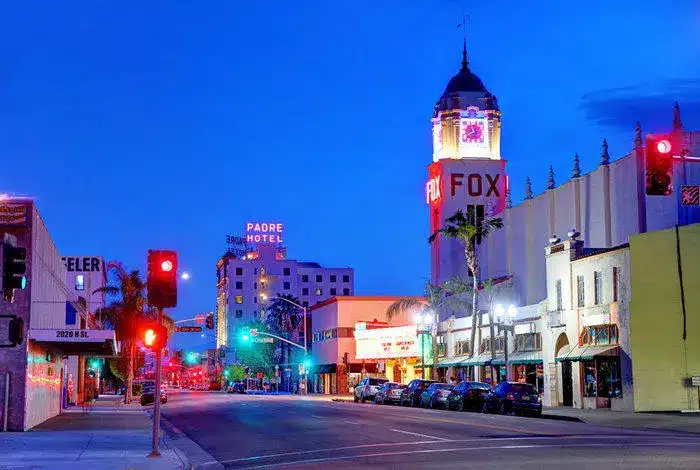
Bakersfield Sound: The City That Changed Country Music in California
Bakersfield, California does not fit the standard narrative of American music history. It is not a coastal city, not a university town, and not a historic entertainment industry hub — it is an agricultural and oil city at the southern end of the San Joaquin Valley, shaped by hard physical work, seasonal heat, and the cultural inheritance of migrants who arrived with little more than the music they carried from the places they left behind. Yet the Bakersfield Sound — the raw, electric country music style that emerged from Kern County’s honky-tonk bars in the late 1950s and early 1960s — changed the direction of American country music more decisively than almost any other regional movement in the genre’s history.
The Sound’s origins are inseparable from the Dust Bowl migration that reshaped California’s Central Valley beginning in the 1930s. Families displaced from Oklahoma, Texas, Arkansas, and Missouri by drought, crop failure, and economic collapse streamed westward along Route 66 and Highway 99 into the San Joaquin Valley, where agricultural labor offered at least the possibility of income.
Bakersfield became one of the primary settlement destinations for this migration, and the migrants brought with them a musical culture — rooted in Southern gospel, Western swing, and working-class honky-tonk — that would eventually transform the city into one of the most consequential music towns in the United States. The Library of Congress holds extensive photographic and documentary records of this migration period that illuminate the human stories behind Bakersfield’s musical emergence.
The Honky-Tonk Scene That Built the Sound
The physical infrastructure of the Bakersfield Sound was the city’s network of working-class bars, dance halls, and roadhouses concentrated along Edison Highway and the industrial corridors east of downtown. These venues served the migrant agricultural workers, oil field laborers, and factory hands who formed the backbone of Kern County’s postwar economy — audiences who wanted music that reflected their actual lives rather than the romanticized, string-sweetened version of country music that Nashville was producing for mainstream radio consumption.
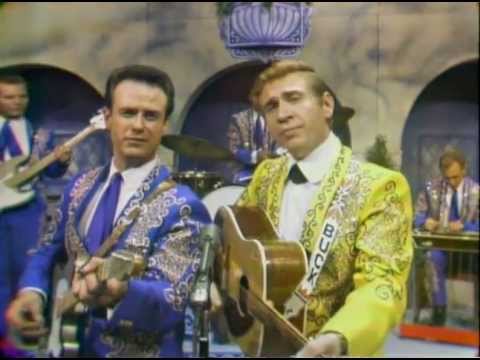
Buck Owens — who arrived in Bakersfield from Sherman, Texas in the early 1950s — recognized this gap and built his career around filling it. His recordings for Capitol Records beginning in 1959 established the defining characteristics of the Bakersfield Sound: the bright, percussive twang of the Fender Telecaster, a solid-body electric guitar whose cutting tone cut through the noise of a crowded dance hall in a way that acoustic or semi-hollow instruments could not; a prominent drum kit that gave the music physical drive; and vocal harmonies that prioritized directness over polish.
Owens’s creative independence — he controlled his own publishing and operated his own recording studio — gave him freedom from the Nashville production system that no major country artist had previously claimed.
Merle Haggard and the Sound’s Second Pillar
If Buck Owens built the Bakersfield Sound’s commercial framework, Merle Haggard gave it its emotional depth. Born in a converted boxcar in Oildale — the working-class community immediately north of Bakersfield — Haggard grew up in the specific social world that the Sound described: the children of Dust Bowl migrants, navigating poverty, instability, and the complicated identity of being Californians who were never quite accepted as such.
Bakersfield’s immigrant heritage runs deeper than the Dust Bowl migration alone. The city’s China Alley district documents a earlier chapter of that story — the Chinese immigrant community that established roots in Kern County during the late nineteenth century — reflecting the layered multi-ethnic history that shaped the social fabric from which the Bakersfield Sound eventually grew.
Haggard’s biography included a period of incarceration at San Quentin State Prison, and his return to Kern County launched a recording career whose directness and narrative honesty set a standard for country songwriting that remains influential today. His refusal to sentimentalize working-class experience — to make poverty picturesque or struggle redemptive in easy ways — distinguished his work from both Nashville mainstream and the folk revival happening simultaneously in the coastal cities.
The Country Music Hall of Fame, which inducted Haggard in 1994, maintains extensive documentation of his career and its significance to the broader arc of American roots music.
Musical Characteristics and Technical Distinctions
The Bakersfield Sound’s departure from Nashville production was not merely aesthetic — it reflected a different theory of what country music was for and who it served. Nashville recordings of the same era layered strings, background vocals, and orchestral arrangements over country song structures, producing a crossover sound designed to reach pop radio audiences. The Bakersfield approach stripped all of that away.
The Telecaster’s role in defining the Sound deserves particular attention. Leo Fender designed the instrument in nearby Fullerton, California in the late 1940s, and its bright, cutting tone became the sonic signature of Bakersfield recordings in the same way that the steel-string acoustic defined bluegrass or the resonator guitar defined Delta blues. Pedal steel guitar — played horizontally using a steel bar and foot pedals to control pitch shifts — added the characteristic sliding, weeping tones that gave Bakersfield records their emotional texture without the orchestral sweetening Nashville preferred.
Together these instruments created a sound that was unmistakably country and unmistakably Californian — a regional voice that asserted its independence from the Nashville industry’s centralizing aesthetic authority.
Bakersfield’s Climate, Culture, and the Sound’s Character
The San Joaquin Valley’s physical environment shaped the social conditions that produced the Bakersfield Sound as directly as any individual artist or venue. Kern County’s climate is demanding — summers regularly exceed 100°F, winters bring dense tule fog that reduces visibility to near zero on valley floors, and the combination of agricultural dust, oil field emissions, and geographic isolation created a landscape that was simultaneously productive and harsh. According to NOAA climate data, Bakersfield averages fewer than six inches of annual rainfall, making it one of the driest cities in the continental United States.
This environment shaped a community culture that valued authenticity, endurance, and the release that music in a honky-tonk provided at the end of a long working week. The bars along Edison Highway were not venues for passive entertainment — they were community spaces where people danced, argued, celebrated, and grieved together.
The music that survived in those spaces had to be honest, had to move, and had to mean something to people whose lives were genuinely difficult. Those requirements produced a sound that has outlasted the specific social conditions that created it.
The Sound’s Legacy Across American Music
The Bakersfield Sound’s influence radiates across American music in ways that extend well beyond country’s genre boundaries. Gram Parsons — who sought to reconcile country music’s emotional directness with rock’s energy during his brief career in the late 1960s — cited Buck Owens and Merle Haggard as primary reference points, and his work with the Flying Burrito Brothers and Emmylou Harris planted seeds that grew into the country rock movement of the 1970s. Dwight Yoakam, who relocated from Kentucky to Los Angeles specifically because he wanted to pursue the Bakersfield aesthetic rather than the Nashville mainstream, carried the Sound forward through the 1980s and 1990s with a fidelity to its original character that connected new audiences to its roots.
Bakersfield’s cultural institutions continue to preserve and interpret the region’s layered history for residents and visitors alike. The California Living Museum offers another dimension of the city’s relationship with the natural and cultural heritage of the San Joaquin Valley — a reminder that Bakersfield’s identity extends well beyond its music into the broader ecology and history of Kern County. For residents exploring the full depth of what this city has produced, Bakersfield’s local history and culture rewards the kind of attention that the Bakersfield Sound itself has always demanded — honest, unhurried, and open to being surprised.


Recent Comments